
How to Use QuickBooks for Retail Stores to Simplify Accounting
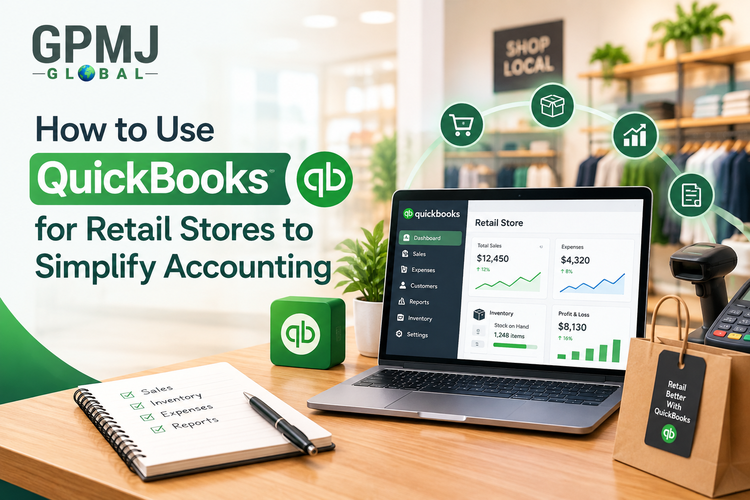
How to Use QuickBooks for Retail Stores to Simplify Accounting
Running a retail business involves much more than selling products to customers. Store owners have to keep track of daily sales, purchases, inventory, supplier payments, operating expenses, taxes, and employee-related costs. QuickBooks for retail store accounting can make these responsibilities easier by bringing important financial information into one organized system. With the right setup and regular bookkeeping, retailers can spend less time dealing with spreadsheets and more time focusing on their customers and business growth. GPMJ Global helps businesses make their accounting processes more organized and efficient with practical accounting and bookkeeping support.
For many retailers, accounting becomes difficult when transactions increase and records are maintained manually. GPMJ Global can help businesses understand how quickbooks for retail store accounting can be used to manage everyday financial activities more effectively. From recording sales and expenses to monitoring financial performance, QuickBooks can provide retailers with a clearer view of where their money is coming from and where it is going.
Why QuickBooks Is Useful for Retail Stores
Retail businesses usually handle a high volume of transactions. Even a small store may process multiple sales every day, purchase stock from different suppliers, pay rent and utilities, and manage several other expenses.
Using accounting software can reduce the amount of manual work involved in recording these transactions.QuickBooks allows retailers to organize financial data, track income and expenses, reconcile accounts, and prepare useful reports.
Keep Sales Records Organized
Recording sales accurately is one of the most important parts of retail accounting. QuickBooks can help businesses maintain organized sales records instead of relying on handwritten notes or disconnected spreadsheets.
Retailers can record income and categorize transactions according to their business requirements. This makes it easier to review sales activity and understand overall revenue.
Track Business Expenses
Retail stores have many ongoing expenses, including:
-
Rent and utilities
-
Inventory purchases
-
Supplier payments
-
Employee wages
-
Advertising and marketing
-
Delivery and transportation
-
Equipment and maintenance
-
Office and administrative expenses
With quickbooks for retail store accounting, these expenses can be categorized and monitored more systematically. Proper expense tracking also makes it easier to review spending patterns and identify areas where unnecessary costs may be reduced.
Managing Retail Inventory and Purchases
Inventory is one of the most important areas of retail accounting. Having too much stock can tie up working capital, while too little inventory can result in missed sales opportunities.
QuickBooks can help retailers organize information related to purchases and inventory, depending on the QuickBooks version and the tools integrated with the business. Retailers can use this information alongside their sales records to get a better understanding of purchasing activity and inventory-related costs.
Connect Sales With Financial Records
Retail businesses often use POS systems or ecommerce platforms to process customer transactions. Connecting or integrating thesesystems with accounting workflows can reduce repetitive data entry.
Instead of entering every transaction manually, businesses can establish a process for transferring relevant sales and payment information into their accounting system. This can help improve consistency and reduce the risk of avoidable data-entry mistakes.
Bank Reconciliation for Retail Businesses
Bank reconciliation is another important accounting task for retailers. A store may receive payments through cash, credit cards, debit cards, online payment platforms, or bank transfers.
QuickBooks can be used to compare recorded transactions with bank statements and identify differences. Regular reconciliation helps retailers determine whether their books accurately reflect their actual financial activity.
GPMJ Global can support businesses with bookkeeping processes such as transaction recording, account reconciliation, and financial record maintenance, helping retail owners maintain more reliable accounting records.
Understanding Retail Financial Reports
One of the biggest advantages of maintaining organized accounting records is the ability to generate useful financial reports.
Retailers can use financial reports to understand the performance of their business rather than relying only on sales figures.
Profit and Loss Statement
A Profit and Loss Statement shows the revenue generated by the business compared with its expenses. It can help a retailer understand whether the store is operating profitably.
Balance Sheet
A Balance Sheet provides an overview of assets, liabilities, and equity. It gives business owners a clearer picture of the financial position of their company.
Cash Flow Information
Cash flow is particularly important for retail businesses because inventory purchases, supplier payments, and operating expenses can affect available cash. Monitoring cash flow can help owners make better decisions about spending and purchasing.
How to Set Up QuickBooks for a Retail Store
Getting the initial setup right can make ongoing accounting much easier. Retailers should start by creating an appropriate chart of accounts based on their business activities.
Next, they should establish categories for income, inventory purchases, operating expenses, payroll, taxes, and other relevant transactions.
It is also important to connect the appropriate bank and payment accounts and establish a regular reconciliation schedule. If the business uses a POS system or ecommerce platform, the retailer should determine how sales information will be transferred into QuickBooks.
Maintain Records Regularly
Accounting should not be treated as a once-a-month activity. Retailers should maintain their records consistently and review transactions regularly.
Daily or weekly bookkeeping can help identify errors earlier and prevent a large backlog of accounting work.
Common Mistakes Retailers Should Avoid
Even with accounting software, retailers can make mistakes if their bookkeeping process is not properly managed.
Some common mistakes include:
-
Mixing personal and business expenses
-
Failing to reconcile bank accounts
-
Incorrectly categorizing transactions
-
Ignoring small expenses
-
Not reviewing financial reports
-
Delaying bookkeeping for several months
-
Failing to maintain proper supporting documents
Using quickbooks for retail store accounting effectively requires more than simply installing the software. Businesses need a consistent process for recording, reviewing, and reconciling their financial information.
When Should You Consider Professional Bookkeeping Support?
As a retail business grows, accounting can become increasingly time-consuming. Store owners may not have enough time to manage transactions, reconcile accounts, review reports, and maintain records while also running daily operations.
GPMJ Global provides bookkeeping and accounting support designed to help businesses maintain organized financial records and improve their accounting workflows. For retailers using QuickBooks, professional support can also help ensure that transactions are recorded correctly and financial information remains up to date.
Frequently Asked Questions
Is QuickBooks suitable for retail stores?
Yes. QuickBooks can be useful for many retail businesses for managing income, expenses, financial records, bank reconciliation, and reporting.
Can QuickBooks track retail sales?
QuickBooks can record and organize sales information. Retailers may also integrate compatible POS or ecommerce systems depending on their specific setup and QuickBooks version.
Can QuickBooks help with inventory accounting?
QuickBooks offers inventory-related features in certain plans and configurations. Retailers should choose the appropriate version and setup based on their inventory management requirements.
How often should a retail store reconcile its accounts?
Regular reconciliation is recommended. Many retailers benefit from reviewing and reconciling their accounts weekly or monthly, depending on transaction volume.
Can an accounting service manage QuickBooks for my retail store?
Yes. A professional bookkeeping provider can help with transaction recording, reconciliation, financial reporting, and ongoing QuickBooks management. GPMJ Global can provide accounting and bookkeeping support based on the needs of your business.
Make Retail Accounting Easier With the Right Support
A reliable accounting process can give retail business owners better visibility into sales, expenses, cash flow, and overall financial performance. QuickBooks for retail store accounting can simplify many routine accounting tasks, but the quality of the results depends on how accurately and consistently the records are maintained.
If managing your books is taking time away from running your retail business, professional support can make the process easier. GPMJ Global can help you manage your bookkeeping and accounting requirements so you can focus on serving customers and growing your retail business.
Contact Now